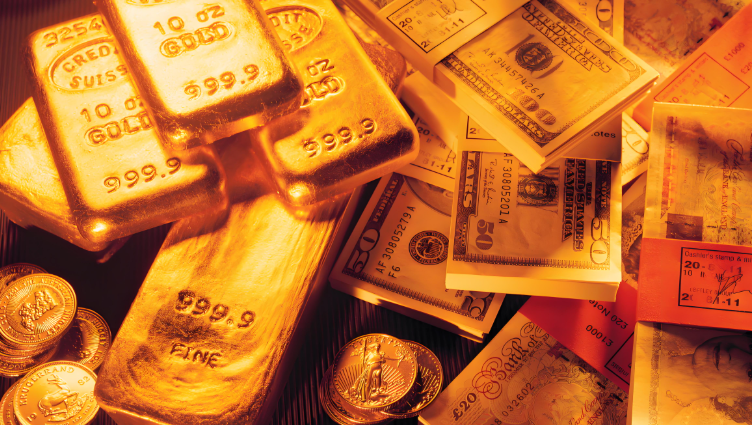
If you've checked the financial news lately, you can't miss the headlines about gold hitting new highs. It's not just a small bump. The gold price surge has been dramatic, leaving many investors and everyday people scratching their heads. Is it just inflation? Is there more to the story? As someone who's tracked this market for over a decade, I can tell you the usual answers often miss the mark. The real drivers are a complex mix of policy shifts, strategic moves by big players you don't hear about on the nightly news, and a fundamental change in how the world views safety. Let's cut through the noise.
What’s Inside This Analysis
The Main Forces Pushing Gold Higher
Forget the single-cause explanations. The recent gold price surge is like a perfect storm. Several major trends converged at once.
Central Bank Gold Buying Spree
This is the elephant in the room that many retail investors overlook. According to the World Gold Council, central banks have been net buyers of gold for over a decade, but the pace and intent have changed. In recent years, it's become a strategic de-dollarization move.
Countries like China, India, and Turkey have been leading the charge. They're not just buying a little; they're making large, consistent purchases to diversify their foreign reserves away from the US dollar and other fiat currencies. When a central bank announces it bought 20 or 30 tonnes in a quarter, that's direct, price-insensitive demand that sucks physical metal off the market. It creates a solid floor under the price that wasn't there to the same degree 15 years ago.
Key Insight: This isn't speculative buying. It's strategic, long-term allocation. Central banks think in decades, not quarters. Their sustained demand suggests a deep-seated lack of confidence in the existing global financial order, which is profoundly bullish for gold.
Inflation and the Search for Real Returns
Yes, inflation matters. But it's more nuanced than "inflation up, gold up." The critical metric is real interest rates (nominal rates minus inflation). When real rates are deeply negative—meaning inflation is eating away at your savings faster than your bank pays you—gold, which pays no yield, suddenly becomes attractive. It's a store of value.
The post-pandemic inflation spike, followed by central banks playing catch-up with rate hikes, created a period of negative real rates. Even as nominal rates rose, inflation was often higher. People and institutions holding cash felt the pinch. Gold became a default parking spot for preserving purchasing power. It's a classic hedge, and with inflation proving stickier than many policymakers expected (look at services inflation and housing costs), that hedge demand has stayed strong.
Geopolitical Turmoil and Safe-Haven Demand
Conflict and uncertainty are gold's oldest friends. The war in Ukraine, tensions in the Middle East, and the broader fracturing of global trade into blocs have injected massive uncertainty into markets. In such times, investors flee to assets perceived as safe and neutral.
Gold's role here is psychological as much as financial. It's an asset no government can print or default on. When trust in geopolitical stability erodes, gold benefits. This demand often comes in sharp spikes—you see a flare-up in headlines, and gold jumps $50 in a day. But the cumulative effect of a multi-year period of heightened tension creates a persistent bid for the metal.
Other Factors Amplifying the Move
The primary drivers set the direction. These secondary factors poured gasoline on the fire.
| Factor | How It Affects Gold | Recent Context |
|---|---|---|
| US Dollar Strength/Weakness | Gold is priced in USD. A weaker dollar makes gold cheaper for foreign buyers, boosting demand. | Market anticipation of the end of the Fed's hiking cycle pressured the dollar in 2023/2024, giving gold a tailwind. |
| ETF and Futures Market Flows | Speculative money in paper gold markets (like the COMEX) can amplify price trends. | After years of outflows, gold ETFs saw significant inflows as the rally gained momentum, creating a feedback loop. |
| Mining Supply Constraints | Flat or declining production means new supply isn't flooding the market to meet demand. | Major discoveries are rare. Mining costs (energy, labor) have risen, and permitting has become harder, capping supply growth. |
A common mistake is to focus only on one of these, like the dollar. I've seen traders get wrecked betting against gold because the dollar was "strong," ignoring the overwhelming physical demand from elsewhere. The market is telling you which force is dominant.
What This Means for Your Money
Okay, gold is up. So what? Should you care? Absolutely, even if you never buy a single ounce.
First, it's a signal. A sustained gold rally is often a vote of no confidence in conventional financial assets and policies. It suggests smart money is preparing for volatility, currency debasement, or worse. It warrants a check-up on your own portfolio's resilience.
Second, for investors, it changes the calculus. The old rule of thumb was to hold 5-10% in gold as a diversifier. In a raging bull market, that allocation can quickly become overweight, forcing a rebalance decision. More importantly, the reason for the rally matters for your other holdings. If it's driven by fears of fiscal dominance (governments printing money to pay debts), then long-dated bonds might be riskier. If it's geopolitical, perhaps your international stock exposure needs review.
I think the biggest practical takeaway is this: gold's behavior is confirming that the low-volatility, everything-goes-up world of the past decade is over. Asset allocation now requires genuine hedging, not just hoping correlations stay low.
Where Does Gold Go From Here?
Crystal ball time. I'm skeptical of precise price targets—they're mostly guesswork. But we can assess the sustainability of the drivers.
- Central Bank Demand: Likely to persist. The geopolitical rift between the West and the BRICS+ bloc isn't healing. Diversification is a long-term strategy. This provides a durable demand base.
- Inflation & Rates: The wild card. If central banks cut rates aggressively while inflation remains above target, real rates could fall further, supporting gold. If they somehow engineer a soft landing with contained inflation, the case weakens. My bet is on the former being harder to achieve.
- Geopolitics: Unpredictable, but the trend is toward fragmentation, not globalization 2.0. This supports periodic safe-haven flows.
The main risk to the rally? A sudden, sharp return of confidence in fiat currencies and a resolution of global conflicts—neither of which seems imminent. A deep, deflationary global recession could also see gold sold for liquidity, though history shows it often performs well during deflationary scares after an initial dip.
Personally, I don't see this as a bubble yet. Bubbles are driven by retail euphoria. While there's more interest, we're not at the stage of barbers and taxi drivers giving gold stock tips. The buying has been institutional and strategic.